

Top 10 Things to Do in Death Valley for First-time Visitors

Before my trip to Death Valley, I had seen incredible photos of its vast nothingness, colorful rock formations, and barren landscapes that looked like they belonged on another planet. And let me tell you, it’s every bit as unique as it looks in photos and truly lives up to the hype.
I visited Death Valley National Park on a day trip from Vegas in January. From salt flats that stretch for miles to colorful canyons, rugged mountains, and massive sand dunes, every stop was one-of-a-kind.
Death Valley is the largest national park in the U.S. and one of the most extreme, with record-breaking temperatures and the lowest point in North America at Badwater Basin. It’s a great place to visit in the cooler winter and spring months when the temperatures make exploring much more enjoyable.
Whether you’re driving in from Las Vegas or from California, Death Valley is worth exploring for its otherworldly scenery. The key is to start early, plan your route in advance, carry plenty of water and snacks, and ensure your car has a full tank of gas, as distances are long and services are limited inside the park.
Here are the top things to do in Death Valley that showcase its incredible variety, all based on my visit and favorite stops.

1. Furnace Creek Visitor Center
Furnace Creek Visitor Center is the perfect first stop in Death Valley National Park. It’s where you can get the latest park updates, talk to the rangers, check which roads and viewpoints are open, and pick up a map before heading out to explore. There’s also a small museum that gives a great overview of the park’s geology and history.
Right outside is the famous Furnace Creek thermometer, a fun photo op that shows the current temperature. When we visited in January, the readings were mild, but in summer they often soar into triple digits, making this spot popular among visitors.

Death Valley is vast and has multiple entry points, so there isn’t a ticketed entrance booth. You can pay your entrance fee at the visitor center, or, if you have the ‘America the Beautiful’ annual pass like us, you can get it validated here.
It’s also a good place to stretch your legs, refill your water bottles, and use the restrooms before you venture deeper into the park.
If you’re looking for a meal or a quick snack, The Ranch at Death Valley is nearby. I was pleasantly surprised that it had a couple of nice restaurants and even an ice-cream parlor. We ate lunch at the Last Kind Words Saloon, which had amazing decor, and then ice cream at the ice cream parlor next door.


2. Zabriske Point
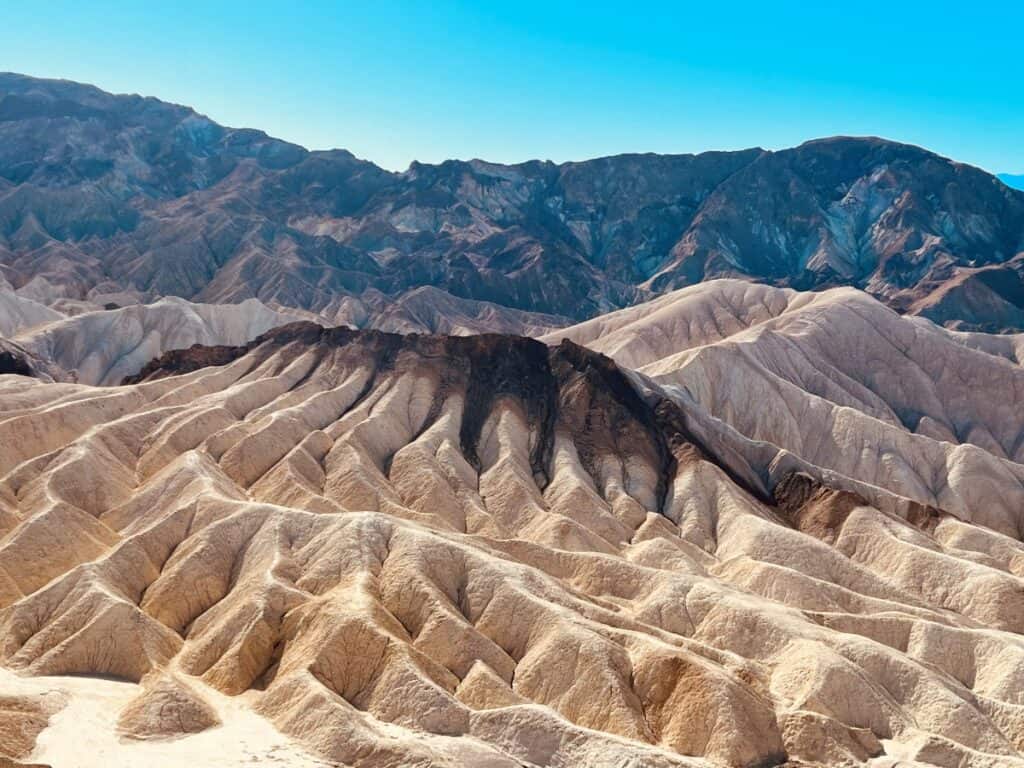
Zabriskie Point is one of the most iconic and photographed spots in Death Valley, and one of my favorite stops. The short walk from the parking lot leads to a viewpoint overlooking a maze of golden badlands that seem to stretch endlessly across the desert.

The colors and textures are so striking that it’s one of those places that looks unreal, even when you’re standing right there. I visited mid-morning and found the view incredible, but early morning might be better as it’s a popular spot to watch sunrise in the park.

The viewpoint is paved and only a short uphill walk, so it’s accessible for most visitors. From the top, you can see Manly Beacon, the dark pointed peak in the middle of the landscape, and the Panamint Mountains in the distance.
There are several hiking trails here, though we didn’t venture out on the trails. There is a large parking lot and restrooms at this stop.
3. Badwater Basin
Badwater Basin is one of Death Valley’s most famous landmarks and a must-see for first-time visitors. If you only have time to see one attraction in Death Valley, I highly recommend stopping here.

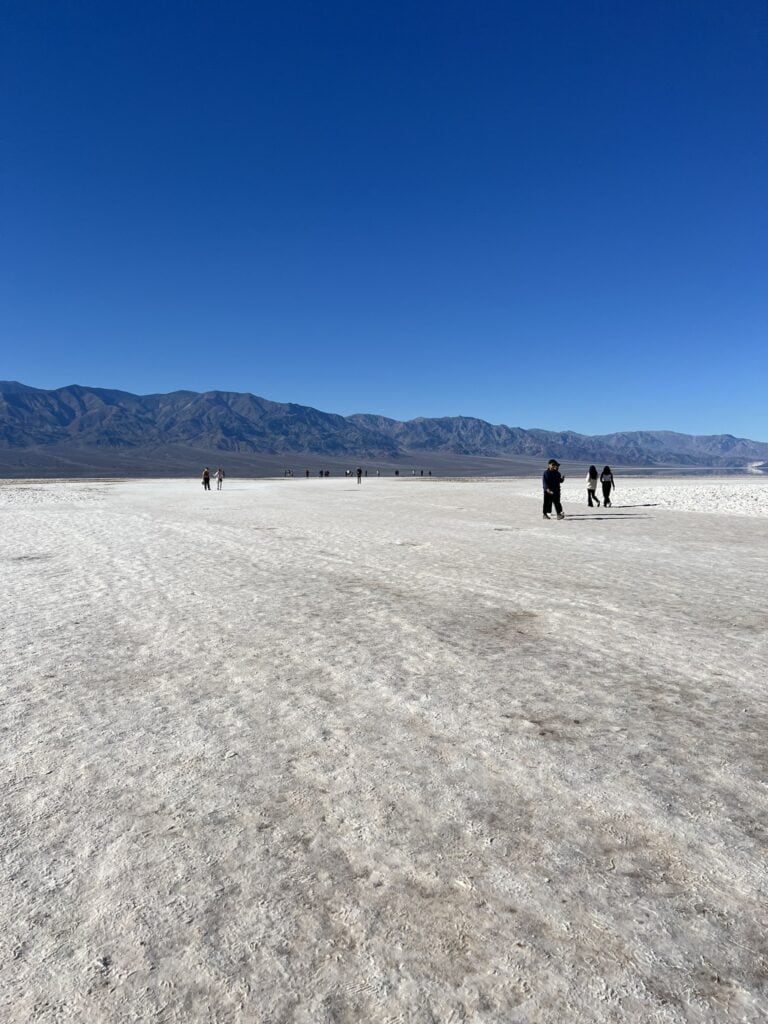
It’s the lowest point in North America at 282 feet below sea level, marked by a small sign high up on the cliff behind the parking area. Be sure to look up to spot it! Standing at the lowest elevation point was a surreal experience and one of the highlights of our day.

The vast salt flats stretch endlessly across the desert, creating a bright white landscape that looks almost otherworldly. When we visited in January 2024, we were lucky enough to see a rare lake at Badwater Basin, Lake Manly, a temporary, shallow lake that appears only after heavy winter rains. It made our visit even more special.

Even though it was winter, with temperatures in the mid-60s F, it still felt warm under the desert sun. I can’t even imagine how intense the heat gets in the summer. Friends who have visited during that time of year have told me it’s almost unbearable.
If you can, plan your visit for the cooler months, like winter or spring, so you can comfortably spend time walking out onto the salt flats and taking in the views.
4. Artists Drive and Artists Palette
A short distance north of Badwater Basin is Artists Drive, a scenic nine-mile one-way loop that winds through colorful hills and eroded canyons. The paved road twists and turns through badlands painted in shades of pink, green, purple, and yellow — the result of mineral oxidation in the rocks.

The highlight of the drive is Artists Palette, a viewpoint where you can clearly see the striking colors that give the area its name. It’s an easy pull-off stop with parking, and you can walk a short distance along the hillside trails to admire the mix of hues up close. We didn’t venture too far here.

Artists Drive is only open to vehicles under 25 feet in length, and the narrow curves make it more enjoyable to drive slowly. We really loved this drive as it felt like driving through a slot canyon.
The one-way loop reconnects with Badwater Road, making it an easy add-on after visiting Badwater Basin and Devil’s Golf Course.
5. Devil’s Golf Course
On Badwater Road, a short detour down a dirt road brings you to Devil’s Golf Course. It’s worth a quick stop since it’s located right between Badwater Basin and Artists Palette. The area has a very unusual landscape, covered with jagged salt formations that have been shaped by wind and heat over thousands of years.

From the parking area, you can admire the rugged terrain or walk a short distance onto the uneven salt crust to see the formations up close. The ground is sharp and brittle, so step carefully if you do. On a quiet day, you may even hear faint crackling sounds as the salt expands in the sun.
6. Golden Canyon Hike
Golden Canyon is one of the most popular hikes in Death Valley National Park and a great way to experience the park’s colorful rock formations up close. The trail begins just a few miles south of Furnace Creek along Badwater Road and winds through tall canyon walls in shades of gold and red.
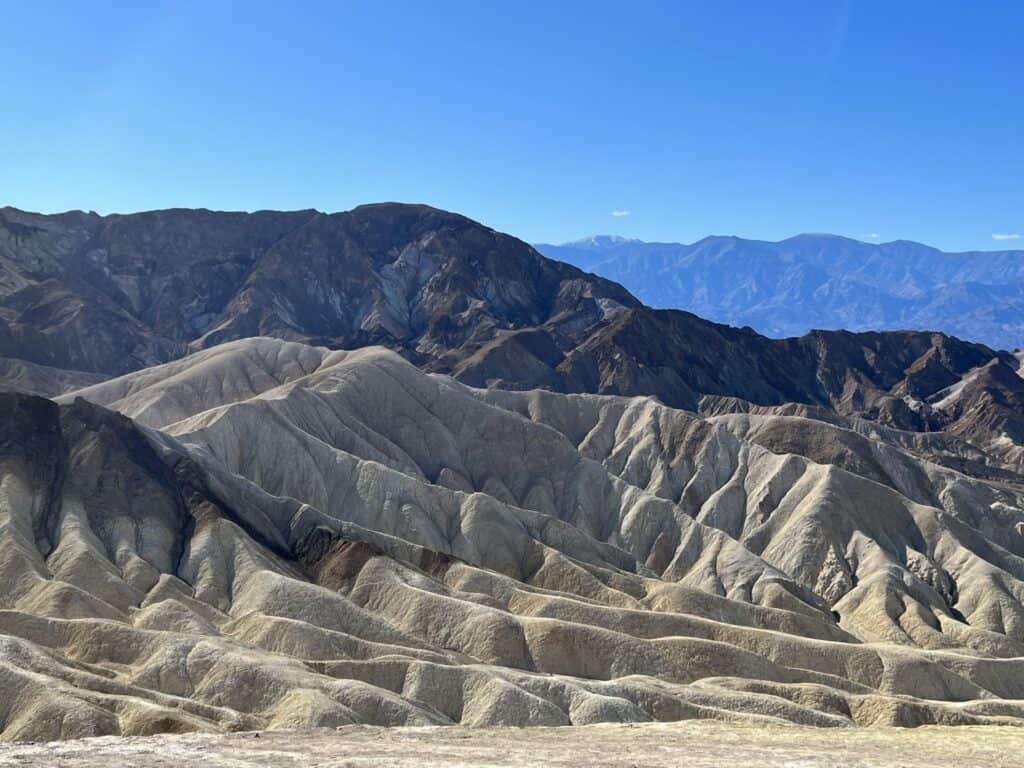
The main trail is about 2 miles round trip, but hikers looking for more can continue farther to reach the Red Cathedral, a dramatic rock formation that rises above the canyon. The path is mostly easy to moderate, with some uneven footing in sections and some scrambling in the latter part of the hike.
This hike is best started early in the day when it’s cooler, as there’s little to no shade along the route. Be sure to carry plenty of water and wear sturdy shoes, since the desert terrain can be rough underfoot.
7. Dante’s View
Dante’s View is one of the most breathtaking viewpoints in Death Valley National Park. Perched at over 5,400 feet above sea level, it offers sweeping panoramic views of the valley floor, the salt flats at Badwater Basin, and the Panamint Mountains in the distance.
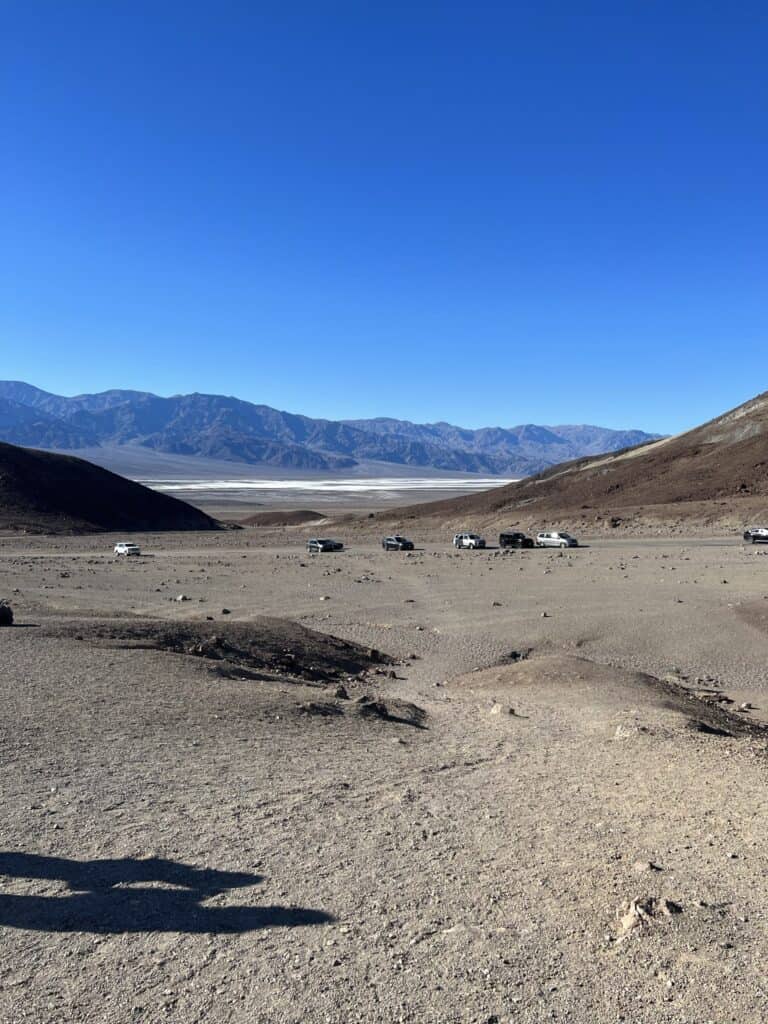
The viewpoint is about a 45-minute drive from Furnace Creek, but the journey is worth it for the views. From the parking area, it’s a short walk to several lookout points where you can admire the scale of the valley from above.
There are no facilities here, so bring water and plan accordingly before making the drive up.
8. Mesquite Sand Dunes
The Mesquite Flat Sand Dunes, located near Stovepipe Wells, cover a large area of the valley floor and are surrounded by distant mountain ranges, creating a classic desert scene. The dunes are easy to reach, just off Highway 190, and require no hiking trails. You can simply walk out of the parking area and explore as far as you like.

Because there’s no shade or marked path, it’s best to explore when temperatures are mild, such as early morning or late afternoon. The dunes can get hot even in winter, and the loose sand makes walking more strenuous than it looks. Carry water, wear sun protection, and give yourself time to enjoy the peaceful desert views.
9. Harmony Borax Works
Just north of Furnace Creek lies Harmony Borax Works, a short interpretive stop that offers a glimpse into Death Valley’s mining history from the late 1800s, when borax was mined here.
Today, visitors can follow a short, easy loop trail around the remains of the old processing plant, boilers, and wagons used to transport borax out of the desert. The famous 20-Mule Team wagons, which hauled borax across long desert routes to nearby railroads, are displayed here as well.
Signs along the trail explain how borax was mined, refined, and shipped, making this a quick but interesting stop that adds historical context to your visit. The entire walk takes about 15 minutes and is accessible year-round.
Right next to the site is Mustard Canyon, a scenic one-way dirt road that winds through soft yellow hills. It’s a nice detour if you have the time.
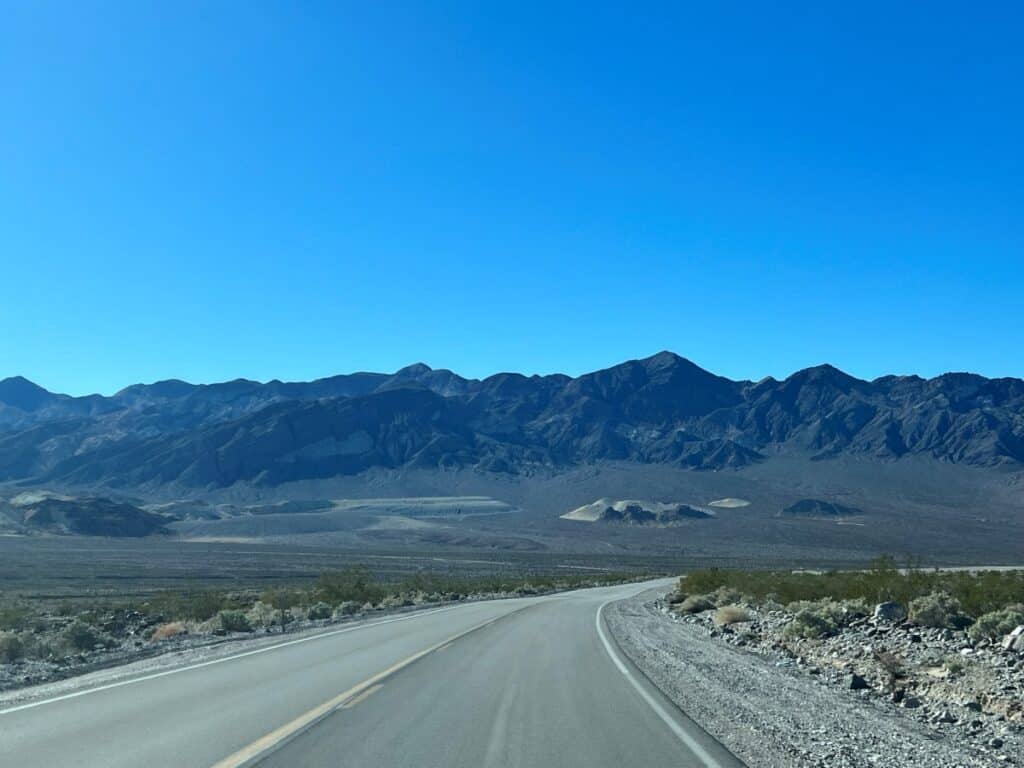
10. Ubehebe Crater
Located in the northern part of Death Valley National Park, Ubehebe Crater is one of the park’s most dramatic geological features. This massive volcanic crater is about half a mile wide and 600 feet deep, created thousands of years ago by a powerful volcanic explosion.
You can walk to the main overlook right from the parking area for panoramic views, or take a moderate difficulty trail that circles the rim for a closer look at the layered terrain.
The drive from Furnace Creek takes about an hour each way. I would recommend adding this stop only if you have an extra half day in your trip. Also, it can be windy here, so bring a light jacket.

Optional add-ons
If you have more than a day in Death Valley or want to explore beyond the main loop, here are a few additional spots worth checking out:
- Mosaic Canyon – A short, scenic hike near Stovepipe Wells with smooth marble walls and narrow slot sections that show off Death Valley’s unique geology.
- Twenty Mule Team Canyon – A short dirt road drive through rolling golden hills, offering a glimpse of the colorful badlands up close.
- Father Crowley Vista Point – A dramatic overlook on the park’s western edge near Panamint Springs, sometimes called ‘Star Wars Canyon’ for the fighter jets that occasionally train there.

Final Takeaways
Death Valley may sound harsh, but it’s one of the most fascinating places I’ve visited. The variety of landscapes here is incredible, from salt flats and colorful canyons to sand dunes and mountain viewpoints. It truly feels like visiting another planet. Even with just a day trip, I felt like I got a real sense of its beauty and extremes.
Whether you’re driving in from Las Vegas or exploring as part of a California road trip, Death Valley is a great national park to visit during the cooler months. It’s a place that makes you appreciate nature’s power and contrast, and leaves a lasting impression.
➡️ Up next, check here how we spent one memorable day in Death Valley!
⭐ Got questions about your trip?
Join my private Facebook group – California Travel Advice & Tips! It’s the perfect spot to connect with me and other California locals, as well as past visitors. It’s a great growing community and the quickest way to get answers for your visit!


